Soy nuts
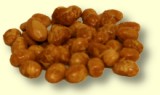 Soy nuts are a healthier snack option than many other snacks. There are two types: deep-fried soy nuts and dry roasted soynuts. They are made from whole soybeans which have been soaked in water and then baked or roasted until crisp and brown. Soy nuts are similar in texture and flavour to peanuts, but are healthier as they contain far less fat and more protein than peanuts. Soy nuts are available in different flavours, such as salt or paprika.
 Dry roasted soy nuts are very popular in Japan, where they play a role in celebrations of ritual purification. During the Bean Throwing Ceremony soy nuts (beans of good fortune) are placed in and then tossed through an open window into air. Each person picks a number of soy nuts equal to his or her age in years.
Benefits of soy nuts
Soy nuts are a nutrition powerhouse and offer many health benefits. They are very rich in protein, fiber, healthy fats, minerals and vitamins. Consuming soy nuts is an easy way to get isoflavones. Soy nuts are often used in scientific studies that investigate the health benefits of isoflavones, because they are one of the tastiest soyfoods available and they are easy to administer.Availability of soy nuts
Soy nuts can be found in natural foods stores and some grocery stores. In Europe they are not that popular and therefore more difficult to find. But you can order them from online shops or make them at home.Comments
Soy nuts from Asda
So these things are my new snackI'm 16,think I eat WAYY too much bad food....but `soya beans` from Asda have filled me up lots in the day,they're salted and roasted,but I do eat ALOT of them.....is there any harm?
I also just wanna say to those who wanna lose wait aswell,as an elevenses thing,it makes you too full for a big lunch.
xx
themusicmiss1234
Soy nuts from Asda
Compared to tofu and soy milk, soy nuts are a very concentrated form of soy. A portion of 100 g soy nuts contains 45 g protein, covering almost your daily need of protein. In order to get a balanced diet, I wouldn't eat more than 50 g soy nuts daily, which may be difficult because they taste like more.Rob
Soy nuts
I recently bought a packet of soya nuts, that are eaten as a snack. they are apparently dry roasted and crunchy but not hard. Can anyone advise me how to make them from the dried beans?.Emma
Soy nuts
I bought a pound in a bulk store of the soy nuts yesterday because the price was less expensive than the regular nuts. I was delighted to see nutrional soy health benefits are still there after the roasting and with less calories. My whole family is enjoying them and now have a container of them on my desk at work. Everyone is munching!Brenda
health food nut
now if you want some thing really good throw osome soy nuts in the nutri bullet with all your usual stuffPatrick
I love these things!
Tim Brown
Tim Brown
Soy nuts
Depending upon your esting habits, even the healthiest of soy nuts contain a high caloric index, as well as 95mg of sodium. Remember to include this in your daily total of sodium consumption. Women die of heart disease every minute nearly. With over 420,000 women dying each year, with 1 in every 3 women suffering a heart attack or stroke every 34 seconds, be cautious in the sodium intake of your daily intake. Albeit, 95mg of sodium per 1/4 serving does not appear to be much, it will add up. Eating in place of any processed food is amazing, and along with a healthy eating plan of fresh organic produce, know your numbers..because ladies, anything in moderation that is healthy keeps your risks down. If you are replacing soy nuts from junk food snacks, I applaud you. I don't recommend falling prey to the American Heart Association's guidelines for what I'd heart healthy; after all, this organization supports the "heart healthy" label on reduced sodium soups and there is nothing worse than seeing this symbol on some of the worst products on shelves today.We are 50 yrs behind on women and heart health! Anything like chips or snack food is definitely better placed with soy nuts, although the best but is the organic walnut and the organic almond. Stay informed, educated with family history of not only heart disease, but the factors that raise your risk by 50%, which include Hugh blood pressure and diabetes. Don't fall victim to the number one Lady Killer, as it kills more women than ALL CANCERS COMBINED! I loved the posts. Happy healthy snacking!
Tru
Soy nuts
Helps with hot flashes and night sweats.Rosemary Carr
Soy nuts
Are soy nuts a true nut?Dee
Soy nuts
The botanical definition of a "nut" is a fruit with a hard wall, such as almonds, pecan nuts or wall nuts. Using this criterion, the soy nut is not a nut but rather a legume. They are called "soy nuts" because that they look and taste a bit like peanuts. Peanuts aren't nuts neither since they are also made of beans. However, for culinary purposes peanuts and soy nuts are usually referred to as nuts.Rob
I love Soy nuts
Soy nuts are an amazing way to stay healthy and in shape!Soyjak
Soy nuts from Asda
Compared to tofu and soy milk, soy nuts are a very concentrated form of soy. A portion of 100 g soy nuts contains 45 g protein, covering almost your daily need of protein. In order to get a balanced diet, I wouldn't eat more than 50 g soy nuts daily, which may be difficult because they taste like more.Rob