History of soybeans
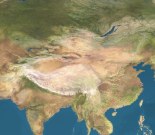
 Soybeans originate from China. In 2853 BC, Emperor Sheng-Nung of China named five sacred plants – soybeans, rice, wheat, barley, and millet. Soybean plants were domesticated between 17th and 11th century BC in the eastern half of China where they were cultivated into a food crop. From about the first century AC to the Age of Discovery (15-16th century), soybeans were introduced into several countries such as Japan, Indonesia, the Philippines, Vietnam, Thailand, Malaysia, Burma, Nepal and India. The spread of the soybean was due to the establishment of sea and land trade routes. The earliest Japanese reference to the soybean is in the classic Kojiki (Records of Ancient Matters) which was completed in 712 AC.
In 1904, the famous American chemist, G. W. Carver discovered that soybeans are a valuable source of protein and oil. He encouraged farmers to rotate their crops with soybeans. To the surprise of farmers, this produced a better crop.
In 1929 Morse spent two years researching soybeans in China, where he gathered more that 10,000 soybean varieties. It wasn't until the 1940's that farming of soybeans really took off in America.
Although soybeans are native to Southeast Asia, 55 percent of production is in the United States. The US produced 75 million metric tons of soybeans in 2000 of which more than one-third was exported. Other leading producers of soybeans are Argentina, Brazil, China and India. Much of the US production is either fed to animals or exported, though US consumption of soy by people has been increasing. Brazil is expected to become the world's biggest soybean exporter in 2004, displacing the United States from the top seat.
Soybeans are one of the crops that are being genetically modified. Since 1997 GMO soybeans are being used in an increasing number of products. There's a lot of controversy around GMO soybeans. However, GMO soybeans have never caused any harm to people. The possible negative aspects of GMO are more of environmental and economic nature: dependence of farmers on a few multinationals and contamination of wild plants.
Comments
Seriously
@Kelly & Veggieman,Are you guys serious?
You're both sound like, "Omg do ur hwk thats not truu"
When in reality, it should be your sorry butts that should be doing the research and getting your facts right.
Perhaps you don't actually understand what GMO is?
You shouldn't try to correct someone who obviously knows more about the subject than you.
Seriously, think before you post
Umadbro - 26/09/2014
glenn
It's the roundup on the gmo soybean that harms people dummy.glenn - 28/04/2015
History of soybeans
Thank you guys with this information it assisted mie to write mie final projectRonald Machekano - 20/10/2015
history of soybean
Thanks for helping me with my soybean project.Jack - 19/04/2016
GMO Anything
How can anything that has been genetically modified be healthy? Man is always trying to change what God designed. It's increasingly difficult to find virgin seeds of most vegetation because the government has modified them to not produce more seeds that will reproduce!Dianne - 30/11/2016
Phyto Estrogen
The real problem of soybeans is NOT how it is modified or produced. The real problem of soy beans is that is is a phytoestrogen. The over consumption of this hormone causes many health problems for both men & women. It was meant for ANIMAL food, not human food.Mary - 19/06/2017
Loved this article
I see y'all are getting some hear about soy beans but I read your article and it's not recommending one to eat it . You are simply informing us of the history which wasn't as long as I thought it would be (like the other articles online) but that's what I love about it. I mean who has the time to read the longest article about the history of soy bean? That's why I love this article, it's also accurate and it's helped me write my article about soy. So thank you for this and sorry on the behalf of the people shooting you down for such great content.-from one writer to another. Keep up the good work!
Sabrina Banks - 21/07/2017
Be thankful!
Eat organic, including organic soy and soy milk and you will be fine. Thank God for everything.Maggie - 22/11/2017
soybeans
thank you gyz for yo help um now able to write my final project for my A lvl stndrdtobbias musariri - 26/11/2017
GMO
a fact very few people actually know, 10mg/kg of vitamin d is toxic to humans, while 5600mg/kg of glyphosate (round up) is toxic. Meaning glyphosate is 560x safer than vitamin d for a human being to ingest. GMO's were created for plant vigour and additional weed control. The hybrid varieties use less fertility, are better adapted to our changing climate, use less water, and help farmers fight off disease pressures. GMO's are truly a blessing for the industry. The GMO varieties also provide bigger yields, meaning more of the world's people can eat at the end of the day. An organic crop yields far lower than a GMO crop, and land used to grow GMO's contains better performance due to lack of weed competition. Glyphosate was considered a "probable carcinogenic" by the WHO (world health organization) when the active ingredient was first tested. Its now over a decade later and the WHO tested glyphosate again, and found it not a carcinogenic.-A knowledgeable farmer who PROUDLY grows GMO's
sydney dk - 12/02/2018
Consequences
There will be consequences in the future for manipulating and perverting the way seeds and land were designed to be used and stewarded. We are foolish do deny the already obvious consequences, our country is in a health crisis.Jake - 06/04/2018
Science Says....
There are pros and cons but phytoestrogens mimics BPA, which is not good. Like all things its seems in moderation its benefits can be helpful and the cons are minimized.https://www.ncbi.nlm.nih.gov/pmc/articles/PMC3074428/
Valentine - 17/04/2019
Genectically Modified Organism = Science kills again.
In 1997 GMO Soy hit the markets. 22 years later testosterone levels in m/f generations never peak (trying to avoid soy now... impossible). 10mg of soy reduce testosterone by 1% in humans. Estrogen overdose affects sex function, mood, memory and drive. Also the mice in the study colored their fur red, blue and pink then cooked and ate the males (last part not true... but why so serious?).Jo Kerson - 22/04/2019
GMO's are GOOD
Thank you for this very helpful article. Now on to the matter of GMO's that everybody got triggered on. GMO's are in fact good and used to increase yield as well as help the product become cheaper all while increasing the nutritional value, and much much more. Do the research. In addition to that, there are only 10 GMO crops. So next time you see a label on your Orange Juice that says non GMO think well obviously because NO ORANGES ARE GROWN WITH GMO'S. If you wish for the farmers to feed almost 10 billion people in 2050 I suggest you do your research on why this is being done. ThanksDrew - 07/10/2019
Broker
My dad was the first farmer to start soy beans in Stclair county Illinois. He bought 2 sacks of seads. He sold them back and bought more. He sold them to the elevator in Southern Illinois. Each year it was more and moreFern Reiker - 08/12/2019
GMOs are good. Soy beans are delicious. Eating tofu won't kill you. Organic food is white privilege on a plate. There is ZERO scientific evidence that GMOs cause any negative health effects.
Patrick - 17/08/2020
Patrick - 17/08/2020
Camera Operator
Genetic modification is what has given us seedless bananas, orange carrots, very specific varieties of all kinds of fruits and vegetables and a bewildering (though arguably pointless) variety of cats and dogs. There's nothing sinister about genetic modification - it's a system of improvement in most cases. Some folks just love a baseless conspiracy theory....Peter Stott - 04/01/2021
Does anyone here know if the first Roundup Ready Soya seeds were made to be sterile, or did this modification come later?
Would really appreciate getting my facts straight on this one. Thanks. Rod Mountain
Rod Mountain - 08/10/2021
Would really appreciate getting my facts straight on this one. Thanks. Rod Mountain
Rod Mountain - 08/10/2021
human female
No bugs on the crops? No birds. This impacts all of Nature. No bees? That's because they are being killed by Monsanto's products and every other chemical used to "enhance" a product. Not to mention the rate of cancer increase due to the estrogen as well as earlier maturation of young children, especially females.Concerned Diane - 05/05/2022
Just don't eat the soy
Wait til menopause, the soy will extend, agitate and bring MORE hot flashes! And when you finally get through to the other side, it will cause more hot flashes than menopause by itself. But I know, I know, it's not the soy. Yeah, right. Can't wait til you have to do your own research for real. Whew. All I can do is warn you, you'll have to make your own decisions. Good luck!Calamity - 09/08/2022
Science cannot prove a negative
Having come upon this webpage in a search for hydrolysis of soybeans in Ancient China, I will add my two bits about GMOs. As pointed out by the physicist Richard Feynman in his lectures on the scientific method, it is impossible to prove a negative since that would assume that nothing more can be known about the topic. Good scientists always presume that their findings are contingent. For example, very few conceived of possibility of global warming due to burning fossil energy at the beginning of the 20th century, but it would have been bad science to say that nothing could happen because we don't currently have sufficient data on the topic, particularly when there were already research papers demonstrating the relationship of introduction of carbon into the atmosphere causes heating as early as 1856. The word "organic" with reference to agriculture was coined in 1942 by Lord Northbourne, with the recognition that farms are like organisms in which everything is interrelated such that nothing can be changed without affecting the whole system. Ecologists from their study of ecosystems have affirmed this with the application ecosystem theory to farms. Any mutation appearing in an organism that changes its relationship to the environment is going to have effect on that environment. These changes tend to have cascading effects. Can it be assumed that engineering of crops to accept widespread introduction of a broad spectrum herbicide or insecticide into ecosystems at the rate of hundreds of millions of kilograms per year won't have significant unforeseen effects? Many secondary effects were predicted and are now being documented as well, for example, resistant strains of weeds and insects, introduction of widespread observance of herbicide in tissues of 95% of the human population and non-human ecosystems, uneasy correlations with rates of a growing number of diseases in human and other populations, etc. It is said, for example, that glyphosate does not effect enzyme pathways in humans, but it does effect enzyme pathways in bacteria living symbiotically in the human gut and skin, to say nothing of the complex and similarly little understood enzyme pathways of bacteria living symbiotically with other organisms in soil and other ecosystems. Most assertions that GMOs are harmless is based on the assumption that because we have not so far identified negative effects (and have suppressed knowledge of them when the do occur), then there are none. Given the immense profits to be had from selling these variants and their associated chemicals, the industry itself is not inclined to energetically search for secondary effects. Furthermore, attempts to publish papers showing, for example, correlation between GMO-related herbicide and incidence of kidney failure among Sri Lankan agricultural workers, have been met by strong threats being levied against scientific publishers by the industry, forcing them to send the papers for further rounds of reviews to determine the methods and results documented were valid. Saying that things don't exist and can't possibly happen, shouting obscenities on webpages, and trying to pull credentials to silent people, is simply bad science -- something Richard Feynman also pointed out.Agroecologist - 28/12/2022
Check Again
How much does Monsanto pay you to cover up the truth, because all my tests so far debunked your so called safe eating product for humans. Even though your website provides a good educational history on Soy Beans, it failed horribly on telling the truth about Soy Beans consumption. My father grew Soy beans for 83 years, he died at 104 and not once he eaten it which maybe reason he lived so long... As for me well how to avoid it, today there are many sinister plots to reduce our health by the globalists and such, culling the masses, all our food is infested with this crap and Thank God I no longer eat out or by products that has soy bean added to it. You better do more research and save your dignity before you are ridiculed by the masses...PeaceVeggieMan - 17/08/2014